Blog
 Blog
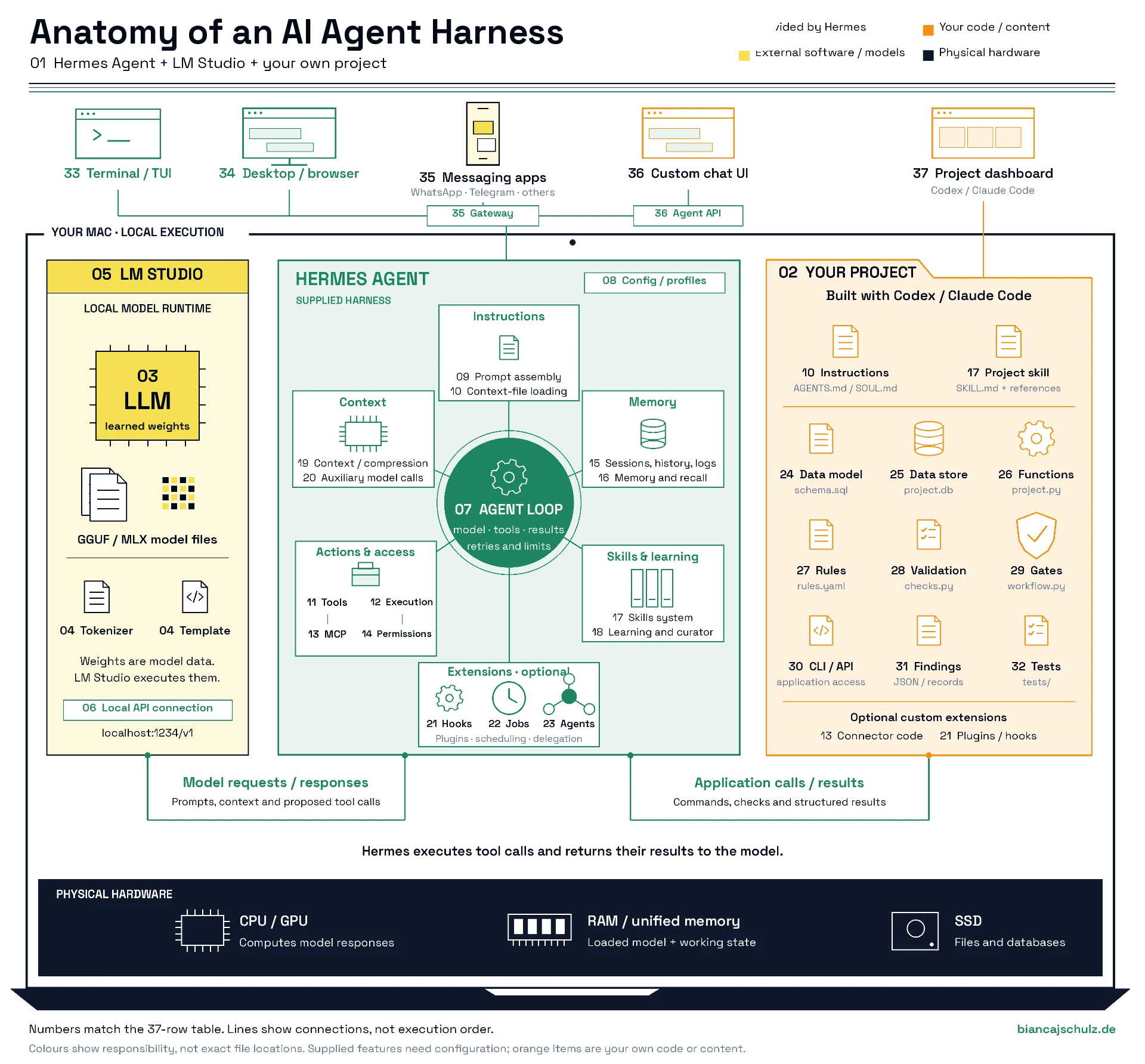
AI Agent Harness — My Personal Setup
My AI setup, including the harness, consists of a local LLM (Qwen), LM Studio, the Hermes agent by Nous Research, skills, and an extended harness featuring a data model, a database, deterministic verification and rule components with gates, and a learning loop.
Read article →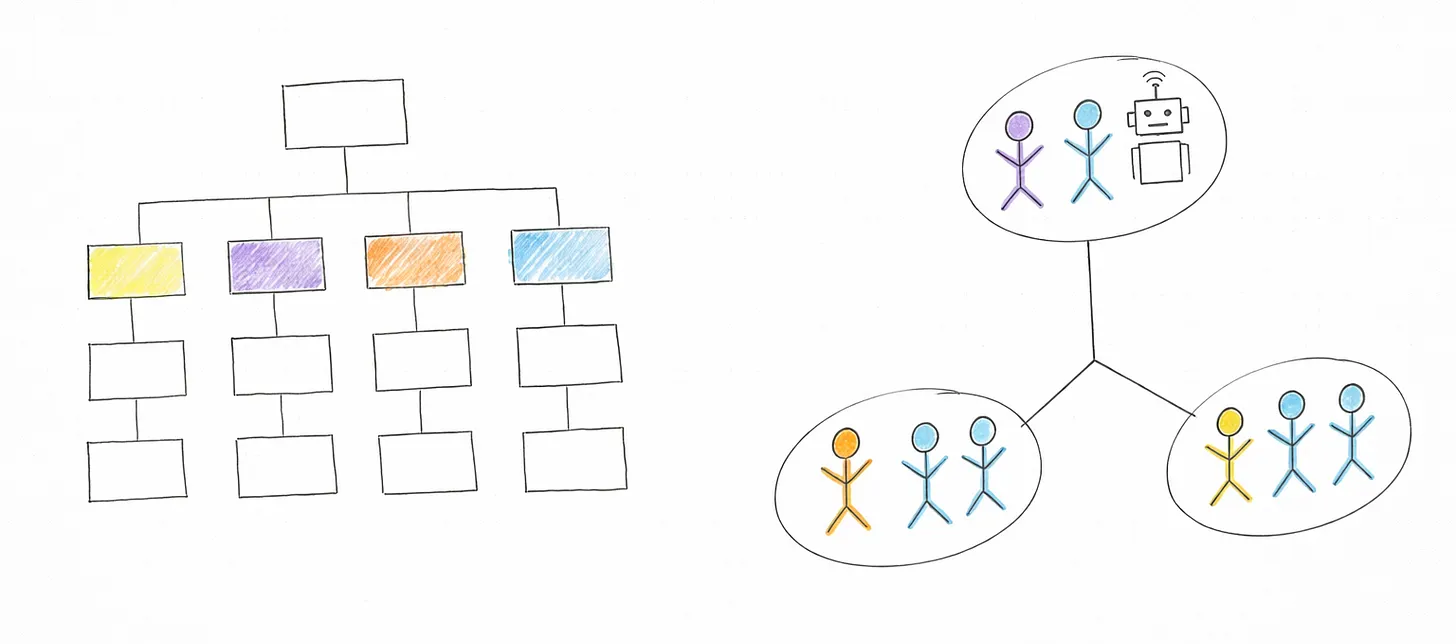
The Method Maze
Guest article in the Practical Data Community by Joe Reis.
Read article →AI Operating Model Study: What It Describes and How It Changes Work, Leadership and Organization
What is an AI Operating Model? Seven documented cases from BMW, Audi, Deutsche Bahn, the European Patent Office, Anthropic and WellSpan – and what follows for ways of working, leadership and organization.
Read article →Connecting the Dots
In the last year, a lot has happened in software development with AI. If you set up the infrastructure, architecture, harness and governance accordingly, a developer with a few AI agents can create high-quality software. In the shortest time. But it changes also the number and scope of features, and also the way you decide what gets built. That means in future we will have super small teams of humans. And that means less leaders and a completely different org chart.
Read article →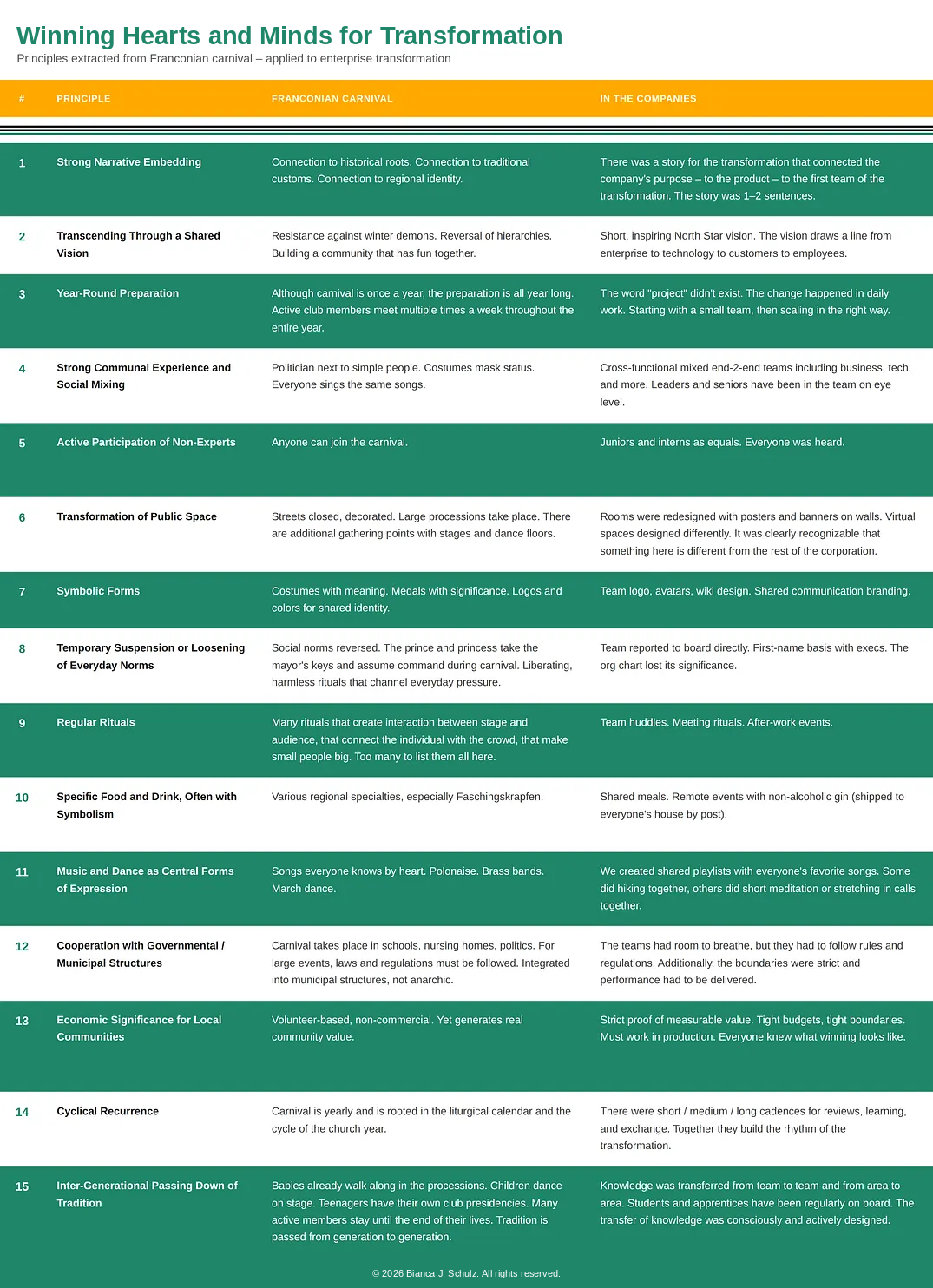
Transformation Through Culture
Real change can't be dictated from above. Why transformation starts with a small nucleus, and what organizations can learn from Franconian carnival.
Read article →
I was thinking of Sartre and Beauvoir because AI wiped out part of my job.
As AI dissolves how things get done, it forces us back to the ultimate human question: What do we actually want to create?
Read article →When you need me – and when you don't
How to tell whether your organization needs change: a list of the traits of healthy organizations and the symptoms of organizational debt.
Read article →Technology Is More Than Just Tech
The way we organize people and work is a technology, too.
Read article →Is AI killing my job?
I can't answer that for every job, but I can tell you my story.
Read article →
The opposite of End-2-End-Responsibility is... Waste
Why end-2-end responsibility and cross-functional teams prevent waste (Muda) – and why AI amplifies your organizational setup.
Read article →What TUM, Stanford, ETH Zurich, McKinsey and Deloitte say about the AI Operating Model. Curated by Bianca J. Schulz
The AI Operating Model in teaching, research and practice: my reading list with nine sources from Germany, Switzerland, the USA and China.
Read article →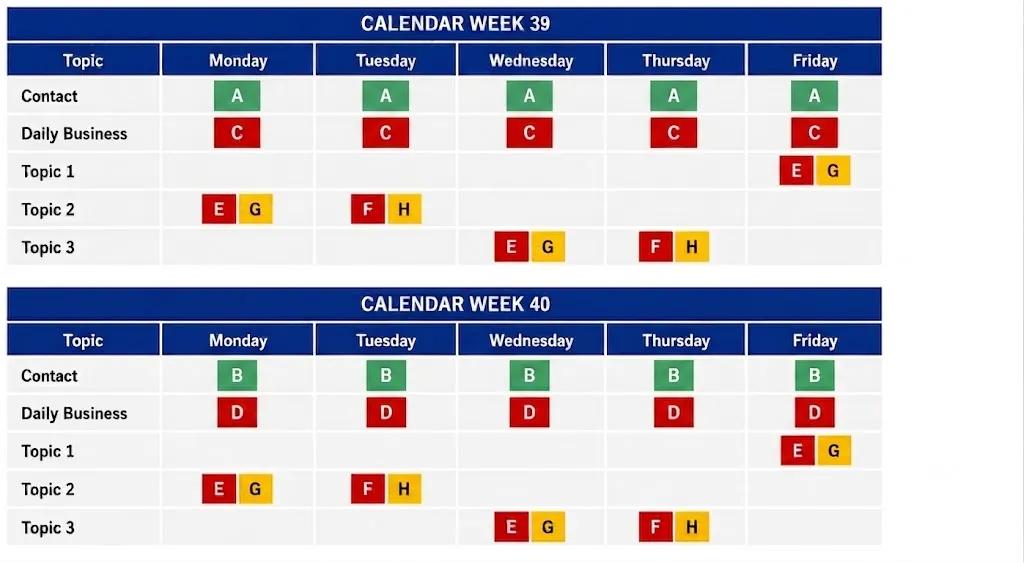
Taming the Chaos in Data and AI teams
2nd guest article in Joe Reis' Practical Data Community.
Read article →
Shape Up vs. Scrum — an improvement from my perspective
Where Shape Up moves further than Scrum — bets instead of backlogs, cycles instead of sprints, outcome instead of process theatre.
Read article →When My Family Asks What I Do: Some Learn Culture in Childhood, Others at Work
Why do highly qualified leaders struggle with what others consider common sense? A personal reflection on culture, self-organized teams, and organizational design as a learnable technology.
Read article →Is Scrum dead in the AI era?
What do we do with Scrum when we use AI agents? What practical tips are there? Does Kanban or Shape Up help us?
Read article →The Inefficiency of Searching and Finding
Can we design a world without platforms and without algorithms now that AI agents are changing all the parameters?
Read article →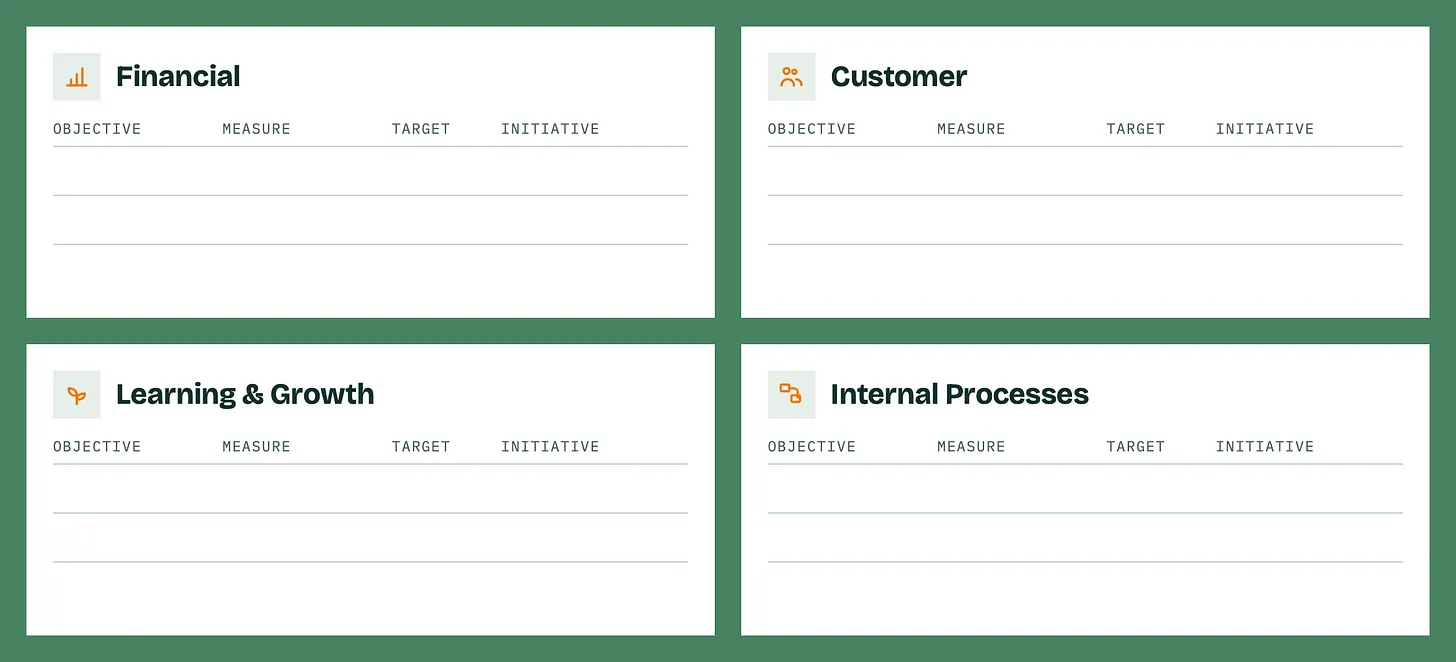
How I Would Approach the ROI of Data Platforms or AI Architectures
Real-world examples, easy-to-apply methods, and how to use AI to identify first steps that carve out business value and prevent wasting millions.
Read article →AI Transformation Happens in Phases, AI Operating Models Will Change
Why AI transformation unfolds in phases, why new companies may overtake the old ones and why hierarchical org charts are of little use along the way.
Read article →
It Is Crystal Clear What Winning Looks Like – and Losing Always Has Consequences
An AI-ready organization knows what winning means for its customers and what happens when an initiative loses. A look at platforms, football, and seven disciplines.
Read article →
Let's start exploring how we can build AI-ready organizations
My mission is to make complex organizations AI-ready. A restaurant metaphor shows why that takes more than AI tools – and which seven disciplines belong together.
Read article →McKinsey Doesn't Know Either
McKinsey's new article on the AI operating model contains nothing truly new – AI forces you instead to finally implement insights that have been known for ages.
Read article →How Can It Be Fun Again?
Seven criteria for organizations where technology, business, responsibility, and professional craft come together again.
Read article →It is a learning journey
Every organization is at a different point. Here are the disciplines worth mastering – where do you stand?
Read article →Can you do simple maths?
Why limiting work in progress is basic mathematics – and why data and AI organizations should start doing less at the same time.
Read article →Customer Orientation and AI
Why customer centricity gets lost despite all the familiar concepts — and which new questions AI brings to the table.
Read article →Transformation is not a product
Isolated AI optimizations weaken the overall system when roots, vision and scaling are not considered from the start.
Read article →An AI-Readable Digital Identity
Why forms, resumes, and platform profiles no longer make sense — and how a single AI-readable file about your own digital identity changes the game.
Read article →AI transformation is really the wrong word
It is always a transformation of the company — AI is merely the occasion, the enabler, the accelerator. What it looks like to start with the customer.
Read article →So What Exactly Is the AI Operating Model?!?
There is no single AI operating model that fits everyone — and here is why
Read article →AI Transformation As I See It
What AI transformation means to me - coping with bureaucracy, customer orientation and personal AI agents navigating a codified world.
Read article →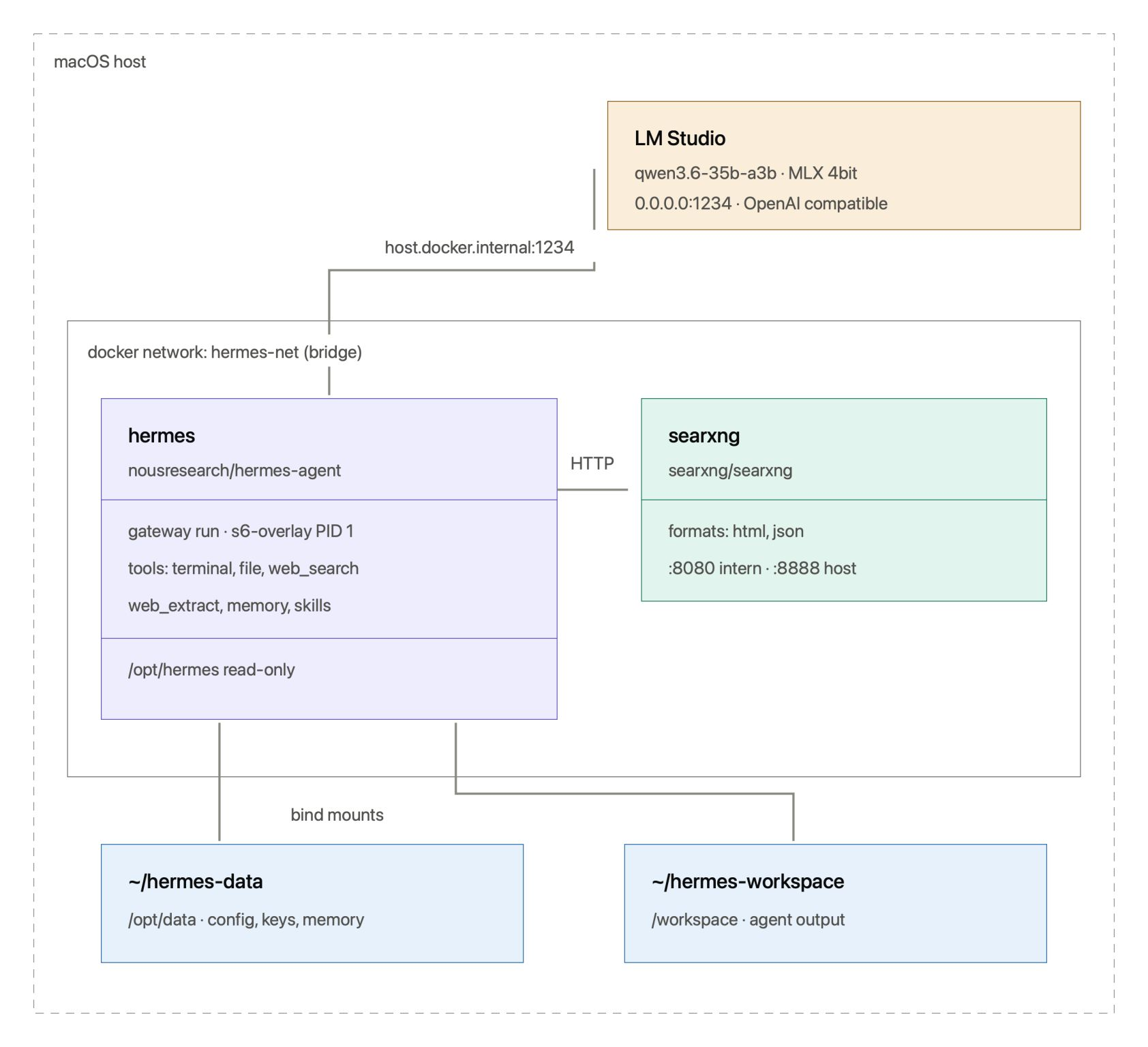
Local AI — for individuals and organizations
A hands-on report on running local AI on a MacBook, and the three operating models for organizations — API, managed deployment, self-hosting.
Read article →Organizational Debt
Definition and mechanics of organizational debt.
Read article →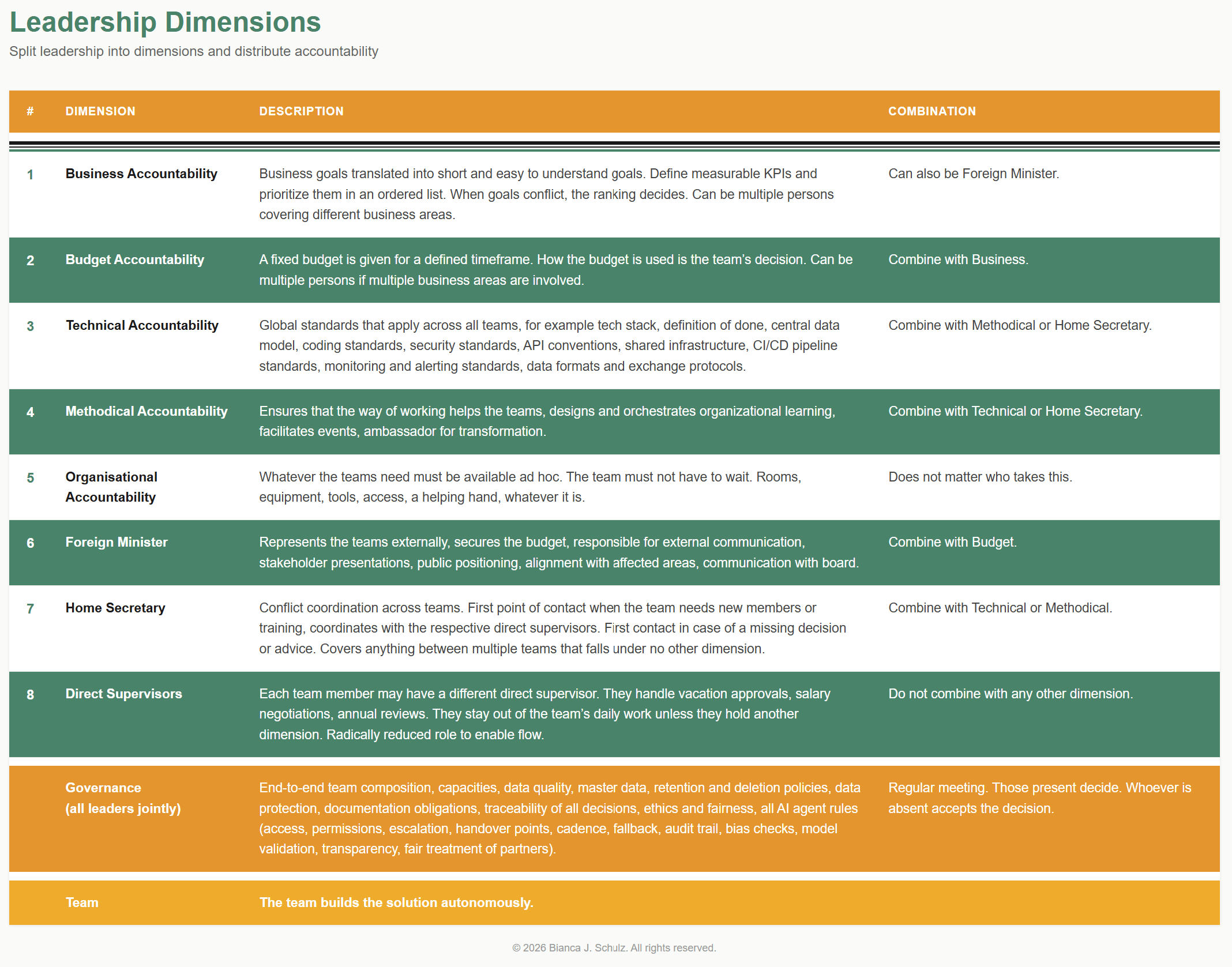
The AI Operating Model Starts with Mindset
…and with how we think about people.
Read article →
AI Models — An Overview
Model types, hosting, calls — and why this is actually the simplest problem when building agentic AI.
Read article →
The Agentic AI Stack
Six architectural layers, six stack types—and why your choice of agentic AI stack determines your operating model.
Read article →
Methods for Innovation
An innovation journey through a chocolate manufactory — six methods for problems where the path to the solution isn't clear.
Read article →
The Black Peter Principle
What has this to do with Data and AI??
Read article →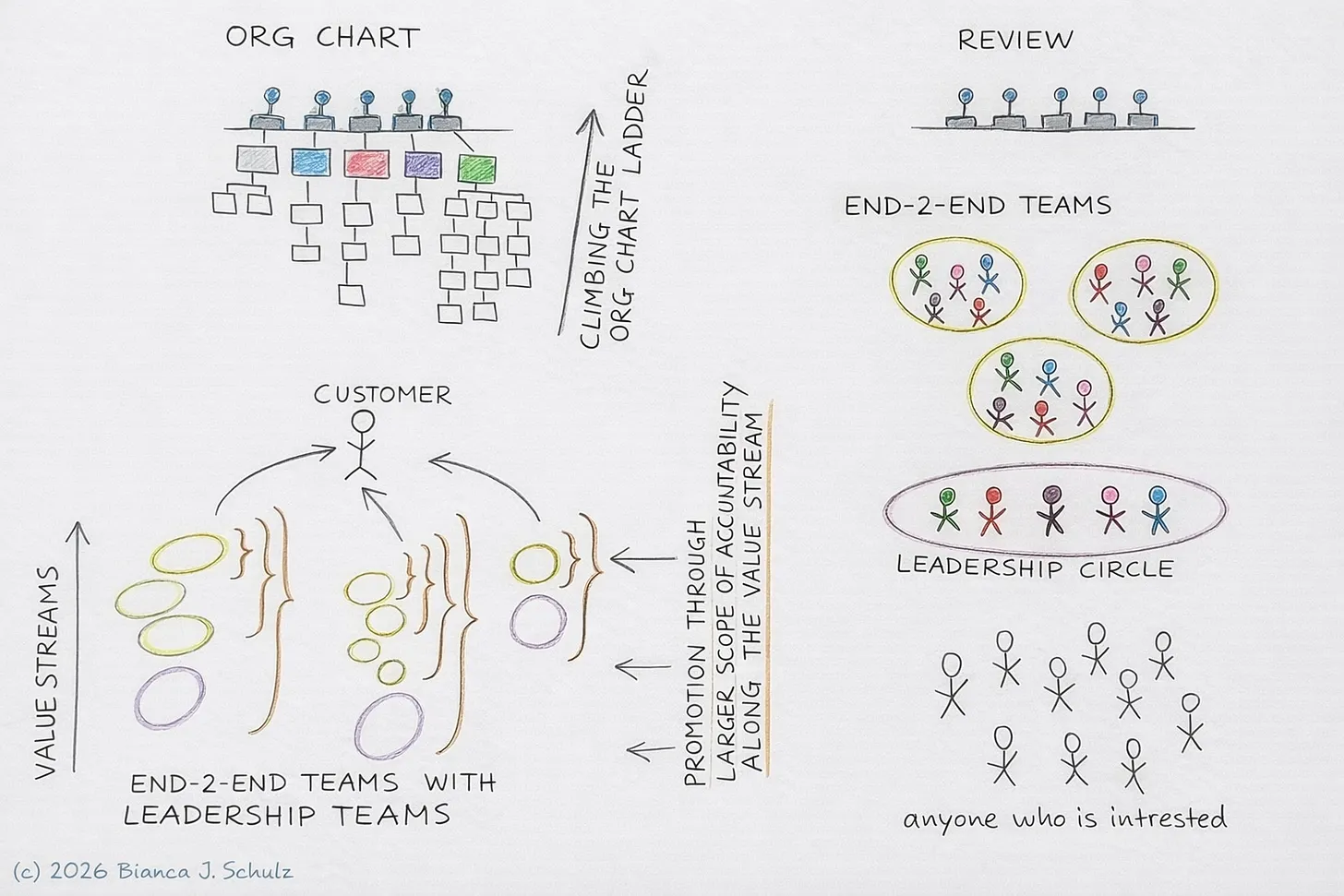
End-2-End Teams and a Leadership Team Along the Value Stream
End-2-end teams, leadership team rethought, career paths along the value stream
Read article →Lean & the Value Stream
No matter how far along your organization is with software, data or other initiatives — you always need Lean principles.
Read article →WIP limits & Little's Law
Maybe you're doing too much in parallel.
Read article →Timeless project management methods
Lean alone, however, is not enough.
Read article →Cadence, not framework
You can't simply adopt a consultancy's framework and expect success. The truth is: not everything is the same.
Read article →Culture eats strategy
The real knowledge always resides within the company.
Read article →Transformation as a learning journey
You may sense it — in the end it's called: Transformation.
Read article →Leadership for the AI age
As you can see: it's not that simple. It works best with leadership teams.
Read article →