Lean in practice: streamlining workflows and organizational structures
You have surely heard of Lean, how it was developed by Toyota in the 1950s as the Lean Production System and has evolved since then into a management philosophy with many helpful practices. Did you also know that the Scrum Guide states on page 4 that Scrum is founded on Lean thinking?
So how do you actually implement all of this? What you may not have known is: the aspiration was always to become a learning organization that continuously improves itself. An important part of Lean is defining a kind of Value Stream and eliminating Muda, that is waste.
These are the 8 different kinds of waste:
- Overproduction – solutions, products or initiatives are created before there is an actual need.
- Waiting – decisions, approvals, information or resources delay the transformation.
- Overprocessing – processes and alignments are more complex than necessary and create no additional benefit.
- Defects and rework – wrong decisions or poor execution lead to corrections and duplicated work.
- Inventory – too many projects, tasks, data or unused capacity tie up resources.
- Motion – unnecessary meetings, alignments, handovers and organizational detours make the work harder.
- Transport – information, decisions or work are passed unnecessarily between departments and hierarchy levels.
- Unused potential – the knowledge, skills, ideas and decision-making competence of employees are not used sufficiently.
In this workshop, let us find out with a practical example how that works. We take one or two end-to-end processes that contribute value for the customer, and look at where all the different kinds of waste occur and how one could go about building a system that continuously learns to improve itself.
By the end of the workshop you have gained a first impression of how you can apply Lean in practice. And that is the basis for using AI sensibly where it does not generate additional waste. It is equally the basis for recognizing what still has to be improved so that AI works.
You have surely noticed already: an AI can only work well if the AI understands what you do and the data is available. I would nevertheless start with Lean, because otherwise you always optimize only one part of the overall picture and do not look at the entire chain — and the danger is great that you end up wasting things after all.
What you take away:
A first impression of how you can apply Lean in practice: on one or two real end-to-end processes, with the places where waste occurs and an idea of what a system looks like that continuously learns to improve itself.
Related workshops
As preparation:
Identifying end-to-end processes, with AI and for the customer's benefitAs a follow-up:
Leadership teams for agile ways of working
Would you like to learn more about this workshop?
Learn more
Organizational Debt
Definition and mechanics of organizational debt.
Read article →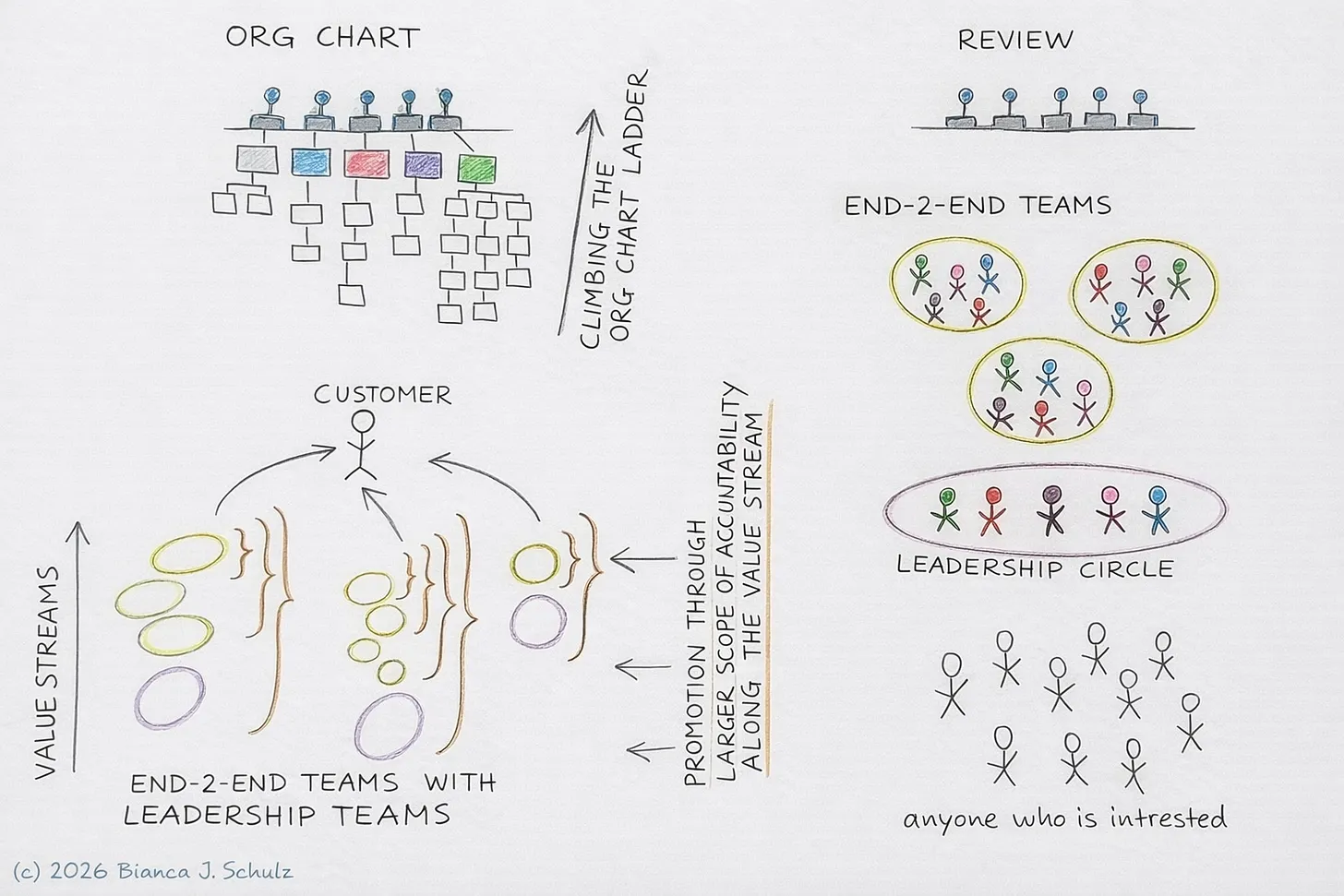
End-2-End Teams and a Leadership Team Along the Value Stream
End-2-end teams, leadership team rethought, career paths along the value stream
Read article →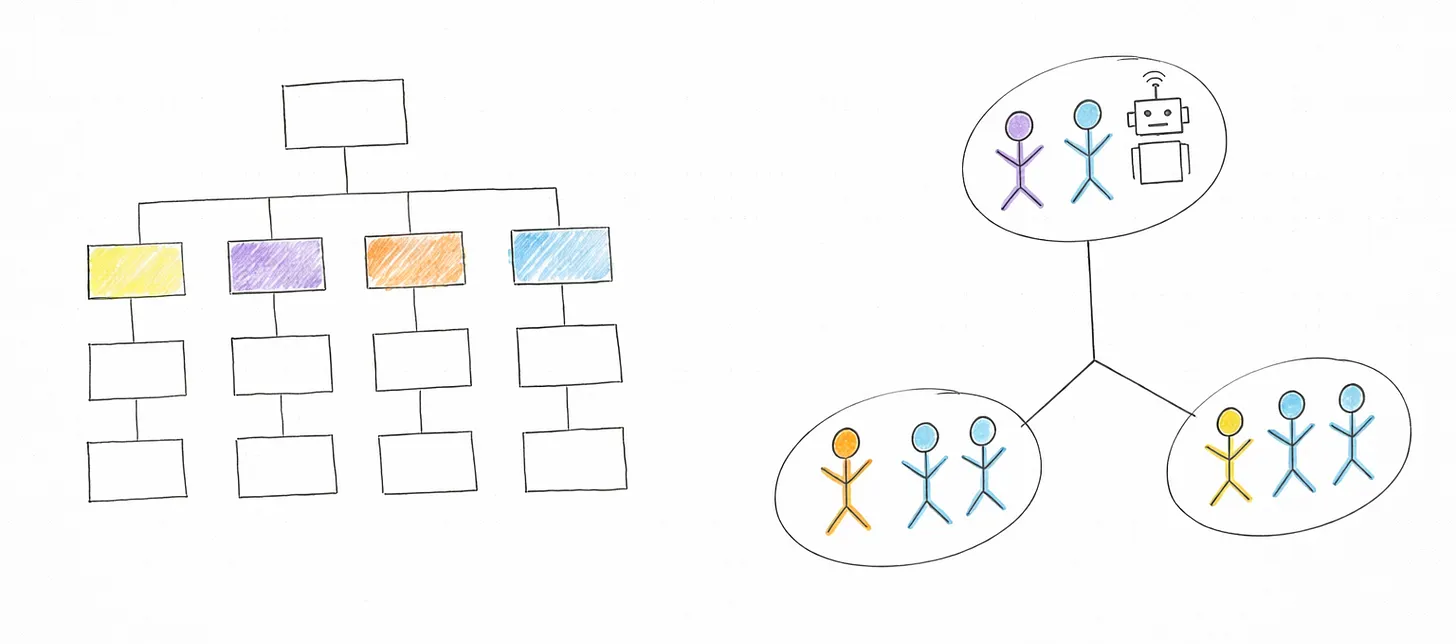
The Method Maze
Guest article in the Practical Data Community by Joe Reis.
Read article →